

November 13, 2025 LTL Freight
What is Less Than Truckload Freight or LTL?
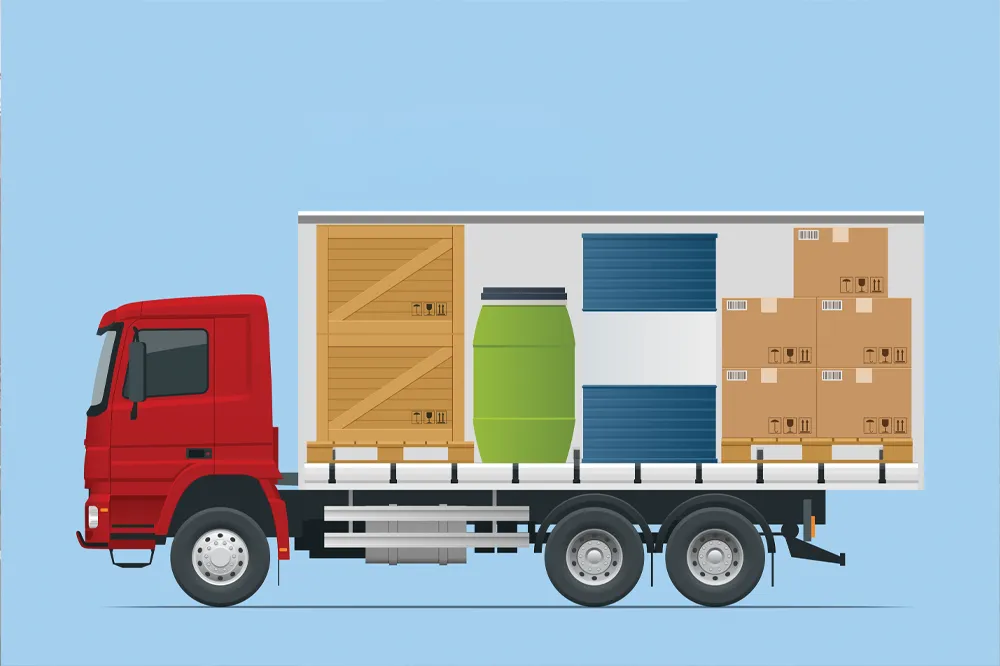
Here’s the short answer: less than truckload (LTL) freight is for shipments that are too big for parcel but too small for a full truckload. Most LTL moves range from about 150 to 20,000 pounds and are often stacked on pallets or crated. Your freight is labeled and scanned, then loaded with other freight going the same direction. Each shipment is tracked by its own paperwork and number, so you still get visibility from pickup to delivery.
How does it move? LTL carriers use a hub-and-spoke network. Your freight is picked up at your dock, taken to a local terminal, and cross-docked to the right outbound trailer. It may pass through one or two regional hubs on the way to the destination terminal, then ride a final truck to the receiver. More touch points mean more scans and a bit more handling, but it also means daily departures and flexible pickup windows. Need a liftgate, inside delivery, or residential drop? Those are common LTL add-ons, and they’re easy to schedule.
What about packaging and labeling? Pallets should be shrink-wrapped tight, corners protected, and weight distributed evenly. Labels should be placed on at least two sides with the full address and PRO number. Because multiple shipments share a trailer, good packaging helps prevent scuffs and tip-overs during cross-docking.
A quick example makes it real: say you have four pallets of parts, 3,200 pounds total, going 900 miles. A full truck would be overkill. With LTL, your pallets share a trailer, you pay for the space and weight you use, and you still get a predictable ETA and updates along the way.
Benefits of LTL
Why choose LTL? Start with cost. You’re paying for the space you use, nothing more. That means you can ship sooner without waiting to fill a full truck. If your sales flow in smaller waves, LTL keeps orders moving and cash flowing, while storage racks stay clear.
But there’s more: frequency and flexibility. Need weekly pallet shipments instead of one big monthly push? LTL makes that easy. With daily linehauls in most lanes, your freight can ride sooner, which helps you keep promises to customers. And because trailers are shared, trucks run fuller, which reduces empty miles and cuts fuel use, good for your budget and better for the air we all breathe.
Here’s another plus: lower per-pound cost than parcel for heavier boxes or skids. Once you cross into a few hundred pounds, parcel rates climb fast. LTL can bring that cost down while still giving you options like appointment delivery, limited-access delivery, or construction site delivery.
Let’s talk control. LTL gives you clear tracking, PRO numbers, and updates at each terminal handoff. You can add services that match your receiver’s setup, liftgate, inside delivery, or call-ahead. And with a reliable carrier network, you get consistency from dock to dock. The end result? Fewer surprises and fewer headaches.
Does Less Than Truckload Freight (LTL) Cost More?
Great question. Compared to parcel, LTL often costs less per pound once your shipment is heavy or palletized. Compared to full truckload (FTL), LTL usually has a lower total price because you’re not paying for an entire trailer. The trade-off: transit can be a bit longer due to terminal stops, and there’s more handling at cross-docks.
What drives the price? A few things: weight and dimensions, density, freight class, distance, and any add-ons. Accessorials, like liftgate, residential delivery, limited access, inside delivery, appointment, or reweigh/reclass, can change the final bill. Fuel surcharge and minimum charges also apply. Want to keep costs in check? Use right-sized pallets, pack tight to boost density, confirm the correct freight class, and note any add-on needs up front so there are no surprises.
So, does LTL cost more? Not usually for the type of shipments it’s built for. If you’ve got 1–6 pallets and flexible transit, LTL is often the sweet spot. If you’re shipping 20+ pallets on a tight deadline to a single stop, then FTL may win. The bottom line: pick the mode that fits your load size, timeline, and delivery needs, and you’ll come out ahead.
Contact Save On Transport Today
Need help booking your next less than truckload freight shipment? Our team at Save On Transport makes it simple. We’ll price your lane, confirm the right freight class, and set up any extras like liftgate, appointment, or limited access. You’ll get clear pickup windows, steady updates, and a direct line to dispatch.
Ready to get a quote or schedule a pickup? Call (855) 427-7283 or request a quote at saveontransport.com. We also handle heavy hauling, container moves (20-ft, 40-ft, and high-cube), farm machinery, boats, and heavy equipment across the U.S. If you want fewer headaches and steady results, reach out today, let’s move your freight the right way.
